Therapy Game Brief, 11/20/18

Many of things we came up with for our brainstorms were liked and caused us to have more deliberation than usual. We decided that the etching idea while giving the most exact stretching would also be comparatively not intuitive for patients as the idea we went with.

Genre: Puzzle Therapy

Audience: People who require physical therapy to be more enjoyable

Primary Objective: Make physical therapy fun and repeatable for people who have to come in to deal with their injuries and make the experience customizable by the physical therapist while also supplying instant results and improvements over time to both the physical therapist and the patient

Introduction to Game: The main mechanic for the game is using the Kinect’s ability to recognize a person’s posture in order to match with a shape determined by the physical therapist. The amount of space that the player matches up with the shape determined by the therapist gives a score between sessions that can be used to show improvement. There are three primary modes for the therapist to engage the patients in this type of activity, but all share a single simple base.

Game Control: The therapist can use one of three ways to create the shape that the patient has to fit into.

  • The therapist can do the pose in front of the Kinect and allow it to record the pose.
  • The therapist can position a 2d model on a screen to make the pose the patient must match.
  • The therapist can draw an opening using a paintbrush-like tool.

Interface/Information: On the patient’s side the interface is minimal with a timer showing how long they have to complete the pose as well as the amount of time needed to hold the pose. There is also a score based on times shown for the session.


For the Therapist, there is a list of all patients and can select them to open up the files within which hold the exercises they, their current scores, and asset of exercises they have saved for the patient.

To the left of the patient’s list there is a repository of exercises set in a drag and drop interface so they can easily assign a set of exercises for any patient quickly.

Main User Mechanics/Actions:

The primary action block is Avoid as the player needs to fit themselves into the shapes needed for the exercise.

The second primary action block is Match as the player must match the shapes on the screen to earn points.

Levels / Environment: These three options form the core mechanic of the three different ways patients can interact with the opening.

  1. A hole in the wall- A wall onscreen approaches the player, and they must match the pose in front of it within the time set by the therapist, and possibly hold it after the wall arrives.
  2. A silhouette- A silhouette on the wall, in the pose determined by the therapist, appears and the patient needs to match the pose for the duration set by the therapist.
  3. Finish the picture- The wall is replaced by a picture put in by the therapist, and the player fits themselves into it. The therapist can print this picture with the player in it to give to the patient.

Therapist Control: All three of these methods share a few things the therapist can control:

  • The time the patient has to get into the pose
    • This time is not counted towards the score
  • The pose to be used
    • The therapist can select from a library of poses to be used
    • They can also create poses using the methods above, which are then saved for future use
  • The time the patient has to hold the pose
  • The color/texture on the wall
    • The therapist can change the wall’s color, or in the picture mode, which pictures the player is fitting into

Data: The therapist can set up series of poses with different timers so they can load in exercises all at once, allowing the therapist to repeat the same exercises each week with the same person to see their progress. Progress is kept as a percentage amount of the shape that is filled averaged over the time the patient has to fill it and is kept track of from wall-to-wall.

Sixty Seconds of play: THe therapist starts up the game for the player, the player sees a silhouette appear on the screen and must match it and hold the pose for a certain amount of time until a new pose appears.

Similar Gameplay: https://www.youtube.com/watch?v=7oIag7dTup0

Team Members:

Myself,

Noah Dartt,

Chris Reitz,

Seth Nunley

Children’s Museum, part 2. 11/12/18

So we are going another round for brainstorming game ideas, this time we worked together on 2 ideas instead of 1 each. We all leaned to science based additions, we think it will fit the goals of our entity better than other options, so we went all in on science. We thought of two things that would work, Gravity and Light. Gravity we decided to make into a pseudo-solar system simulator and light into a laser box.

Brainstorm 1: Grains of Galaxy

  1.  Space/God Sim, Education
  2.  A Space scape will be projected onto the sandbox, when large piles of sand will act as gravity wells attracting mass to it, while large dips will be treated as Gravitation-repulse wells sending matter away from it. Matter will digitally be thrown from the sides of the sandbox as Asteroids and Space Dust Clouds. This matter will circle the gravity wells and combine, if enough combines Planets, Gas Giants, or new stars will be made (Depending on make-up) and new matter will circle the gravity well or the large mass, becoming moons and more. When a Gravity well is disturbed, the mass surrounding it will fling off into space or into other wells.
  3. https://www.youtube.com/watch?v=hz8_RNj6T80
  4. Universe-Sandbox-²-Roche-Limit-Moon-650x365
  5.  The serious game objective is to entertain children and their parents with a semi-educational exhibit, one that children will want to go back to.
  6.   It will be an exhibit unparalleled in visual appeal, while also being interactive enough to have people touch it in a meaningful way but exciting enough for people to just watch it run. It also provides educational insight on the formation of planetary and solar bodies.
  7. It would be entertaining to just watch, allowing for more people to enjoy it than could actually manipulate the sand in the box at once.

Brainstorm 2: Refraction

  1.  Puzzle
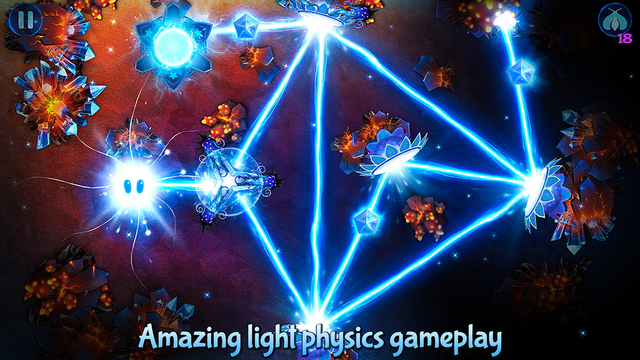
  2.  Four digital lasers will beam from the sides of the sandbox, and four laser end points as well. The general goal is to get the laser of the right shape/texture and color into the corresponding point. To do this, people need to manipulate the sand. Certain heights of sand will create specific digital structures, these structure act like shaped mirrors. Using the mirrors, the laser can get to its goal, when a goal is reached a new laser and end point appear in a new Type/color. the sandbox will cycle through the entire rainbow of colors and the 4 laser types. the reason for the types is colorblindness may negatively impact just differences in color.
  3. https://www.youtube.com/watch?v=B33b7nC_dOo
  4. godoflight
  5. The serious game objective is to entertain children and their parents with a semi-educational exhibit, one that children will want to go back to.
  6. The game will be highly interactive and tactile with the lasers behaving in real-time. While teaching children about how light reflects.
  7. It is very active and requires input to change the state while also having goals and no real end-point.


Team Members:

Myself,

Noah Dartt,

Chris Reitz,

Seth Nunley

Children’s Museum Kinect Sandbox, 11/6/18

We were given some restrictions, as this is going to be an exhibit rather than a sit down and do game. I thought since we will be dealing with children and their parents, we should make something that isn’t complicated but fascinating. So i thought adding another layer of science that would need the depth and distance information provided by the baseline product, that led to wind or water, water already exists and wind has more unique potential when dealing with non-ending game qualities.

First Game Brainstorm:

  1.  Physics sim education
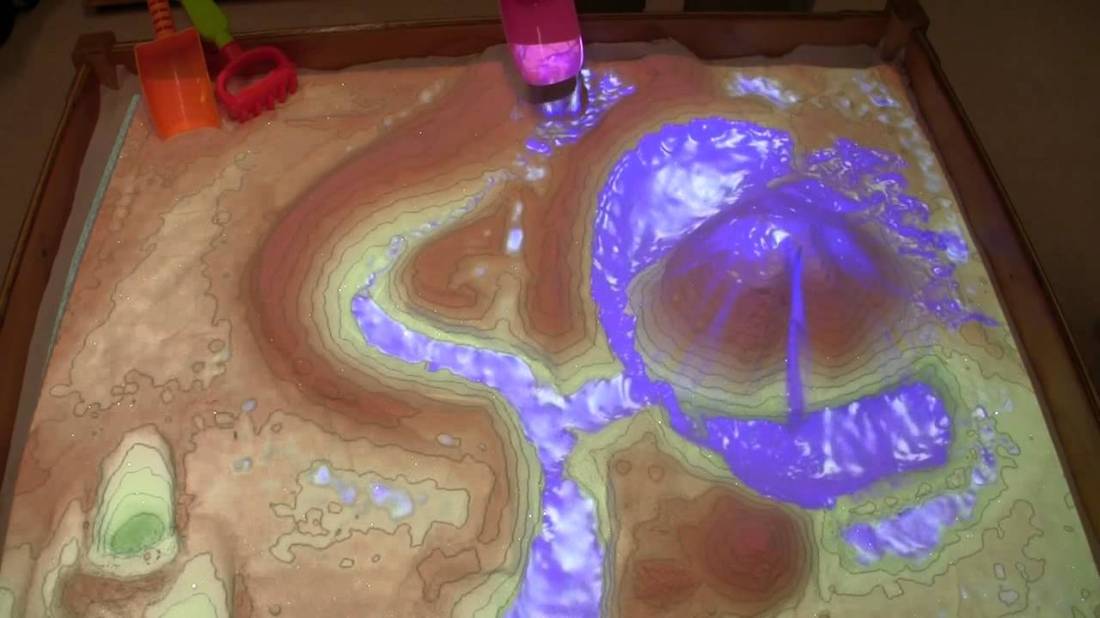
  2.  In addition to the normal depth mechanics, adding Digital Wind flowing at a certain depth from a certain side of the box. Changing the sand changes the flow of the wind, increasing and decreasing speed. the wind speed will be shown where it is “Leaving” the box (Touching another side) encouraging trying different sand shapes and setups to change wind speeds.
  3.  (I don’t think a video game actually uses this mechanic yet)
  4.  maxresdefault But “Wind” instead of “Water”
  5.  The serious game goal is to add a active/gamey mechanic to the already existing ARsandbox. To excite but also educate our target audience, children and their parents.
  6.  While abiding to the no defined end requirement it provides numbers that can be changed giving a goal to those who interact that may be unique to the user. providing another layer of entertainment while also furthering education with wind dynamics, also being super cool to parents.
  7. Heavy scientific basis, will entertain nearly any age, and intuitive “rules”.

Augmented Brainstorm (edits):

So after some class discussion, I’ve done a reinvention on my idea to be more drawing to the eye and visually complex.

Alterations:

Change the topographical field into a grassy hill landscape, the wind rustling the grass in waves. Change the denotation of wind movement from more scientifically defined lines to leaves and flower petals in the wind. Using this game for aesthetic inspiration https://www.youtube.com/watch?v=-FRKGU9Zu_o. Also making flowers grow where the wind is light and if a large enough wind hits the flowers they will blow away with the wind.

Team Member:

Myself,

Noah Dartt,

Chris Reitz,

Seth Nunley.

Gettysburg Game Brief 10/30/18

While the feedback was quite positive, all our team’s ideas were approved of. we decided to focus on our AR guide and Mini-games ideas for our game brief. Putting together an experience around our guide who would inform users about history within their context while bringing them to designated locations to play mini-games and for the guide to give their opinion of historical figures and events. Using the guide for education and a unique historical experience while having mini-games to increase engagement, interactivity, and memory retention. Making an overall experience that we, as people, qualify for the target audience would want to have and go to.

Genre: Exploration Minigames

Audience: Teens to Young Adults

Primary Objective: Educate the user about the events at gettysburg as well as create an interesting and repeatable experience to both attract newcomers and get returning visitors

Introduction to the Game: Upon entering the park and activating the app the visitor is assigned a historical entity that will follow them around teaching them about the battlefield based on where they are currently. The historical figure could also lead them on the path they took in the battle telling them their story and experiences. Having the historical figure will allow them a more interesting way to learn about the battlefield and provide a better interactive experience. Having minigames scattered throughout the park will tie the information the visitor is getting to actual actions which will improve the retention of information as well as give a more engaging experience overall.

Game Control:  The player controls their location by walking throughout the park. Minigames are controlled through a combination of buttons on their touch screen and motion.

Objectives: Minigames have competitive scoring much like arcade machines. You can post your minigame results on social media.

Interface/Information: Most interface is an interactive map which marks all of the interactive locations and tracks the players location in real time using GPS.

Main User Mechanics/Actions:

Move: the vast majority of the mechanics in the game are based on motion and location.

The minigames would each have their own blocks and this would vary game to game.

Levels/Environment: The environment is the map of gettysburg and the levels are the different minigames the player plays.

List of suggested minigames:

-Reloading a musket
-Rearming a cannon

-Cooking a soldier’s meal

-Preparing rations

-Setting up a tent

-Target practice with a Musket

-Making Musket charges (Ammunition)

-Soldier injury diagnosis

-I spy with my little eye…. Hostiles!! (Find enemies with a spyglass)

-Making attack plans (Showing how successful their military tactics might have been)

-Learn basic bayonet duel

-Soldiers physical training regime

-Play a marching drum pattern or patterns

-Amputating an injured leg

-Amputating an injured hand

–And more as needed

Obstacles, Interactive Elements, Npcs, etc: The main NPC they will interact with is the historical figure, interactive monuments that will trigger their guide to tell you about the monument, and the various aspects of the minigames.

How does it meet the theme entity and objective: By allowing players to compete and tweet their minigame results it promotes the spread of information about gettysburg which will pique the interest of people who might wish to either return to the park or go to the park for the first time.

Sixty seconds of play: The visitor approaches a monument and the guide appears and tells you about the monument. Once it has finished its description of the monument a minigame may appear.

Similar Gameplay: https://www.youtube.com/watch?v=UdqDRR9-w0A


Team Members:

Myself,

Noah Dartt,

Chris Reitz,

Seth Nunley.

Physical Therapy, Making Recovery Easier 10/23/18

Serious Game Brainstorm:

Runic Run

  1.  Microsoft Kinect, Puzzle, Scored
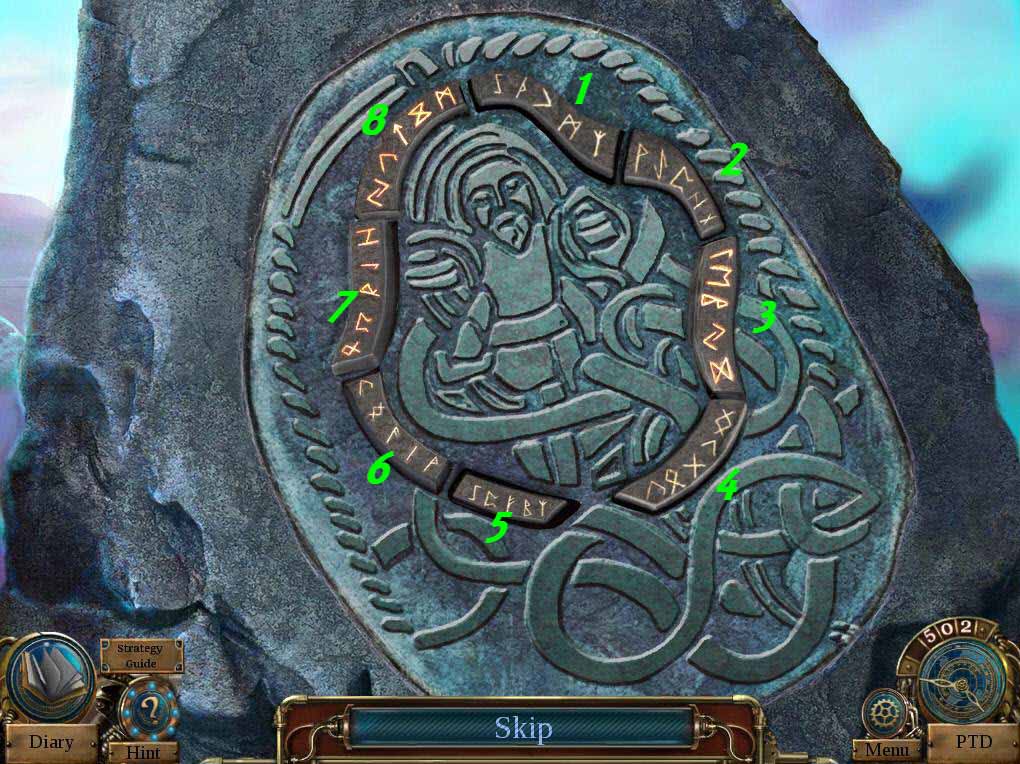
  2.  The user moves their body in particular stretching patterns that the Microsoft Kinect will detect, causing a marker to match a projected “Runic” line, scored based on proper Motion and Speed (proper speed for stretching). The patterns can be changed to work specific parts of the body with acute settings. The patterns can be tailored for specific unique needs not inherently implemented into the game, the physical therapist can map new stretching exercises into the game by doing the exercises for the Kinect to map.
  3.  Video of a game with similar mechanics, notably the therapy game will be single player rather than competitive. https://www.youtube.com/watch?v=-J5eaRbiEhM 260px-Those_Darn_Keypads_TraceRace
  4.  The Style and Aesthetic inspirationStyle_Image
  5.  The serious goal of the game is to provide the Patients in need of doing stretching exercises in a entertaining and interactive way, allowing them to go through their therapy while keeping their mind off the fact that they are doing therapy. It also is adaptive enough to be usable for anything a therapist could map, giving a wide profile on what it can cover.
  6.  The stretching can be easily translated into a tracing game while also being a game that people who are not in physical therapy would play, the accuracy scoring also encourages better stretching.
  7. Unique attributes: Can be mapped to any stretching a Therapist could do, a popular style of game known to be engaging, may improve stretching consistency, easy for a not tech-savvy physical therapist to customize a stretching routine, encourages stretching improvement through scoring.

Team Members:

Myself.

Noah Dartt,

Chris Reitz,

Seth Nunley.

Game Brief: Horse Barn Firefighter Training 10/9/18

Since we got a new more specified set of parameters after and from our brainstormed ideas, we were tasked with assembling a product from those parameters. We also needed to make it more engaging than a basic task simulator, so that firefighters would want to train more instead of thinking it was bother.

Game Brief:

Genre: VR Simulation

Audience: Firefighters receiving training

Primary Objective: The primary objective of this game is to train firefighters to deal with horses in barn fires by using detailed horse simulation split into two parts, a horse interaction stage and a barn fire simulation stage.
Firefighters would receive scores based on their speed in saving a horse and each fire station would have its own score which would encourage firefighters to spend more time training with the game and encourage them to take it more seriously.

Introduction to the Game: Firefighters will cooperate in and out of the VR in order to get the best speed gaining them a better score. Multiple firefighters in VR will cooperate with each other and with firefighters outside of VR to promote cooperation and communication in these situations. Firefighters in VR will be in a simulated barn while the firefighters outside the barn will have maps and data which they will need to relay to the firefighters in VR.

What mechanics are you using to actualize the objective: The cooperation between the firefighters in VR and out of VR using maps and information not available to both parties promote communication and teach firefighters how to deal with horses both in dire situations and out of dire situations.

The detailed horse AI will help get firefighters used to equine behavior without having to put themselves or the animals in real danger. Having multiple stages allows the firefighters to get used to both the VR and the animal in non dire situations allowing for greater understanding to be achieved.

Before each session there would be a speech or recording of a firefighter telling a story about their own experience working on a barn fire or saving horses from a fire.

Game Control: Full VR immersion using both full head control and handheld interactors. Movement would be achieved using Gorn like dragging. EX: https://www.youtube.com/watch?v=zFxfwKlforE  

Score/Objective: The objective would be two fold, to rescue the horse (if possible) as quickly and with minimal risk as possible.

Interface/information: In the first stage the HUD will have information regarding the horses mood, reactions, health, and the environment while you interact with it. This could be disabled externally to promote learning from just the horses reactions and appearance if needed.

In the second stage the VR headset and the in VR view will match the view from inside a firefighters helm as closely as possible with most if not all the information being viewed by firefighters outside of the VR simulation

Main User Mechanics/Actions:

Communicate: One of the core aspects of this game is the communication between the VR user and those outside of VR games.

Avoid: The user must avoid dangerous situations and areas such as fire, rearing horses, or collapsing structures.

Levels/Environments: There would be two levels/environments. The first would be a completely blank area except for the horse itself allowing you to interact with it an learn without the danger. The second would be a barn fire with a number of horses inside. The barns layout would be drawn from a large number premade layouts and the situations would be randomized each time.

Obstacles: The fire and structure itself as well as the horses themselves.

Describe and Explain the unique ways in which your game idea meets the needs of the theme, entity, AND objective: The game promotes communication between firefighters both in and out of the simulation in order to train multiple firefighters at the same time in both interacting with horses and barn fires.

Sixty Seconds of Play: The training instructor would boot up the game and set up the simulation. The VR users would enter the simulation environment and those outside the simulation would get access to the maps and simulation data. They would work together to save the horses.

Link to Video of Similar Gameplay: https://www.youtube.com/watch?v=BYunaBkn9Ng


Team Members

Myself,

Noah Dartt,

Chris Reitz,

Seth Nunley

Making Gettysburg Fields Fun for AR. 10/2/18

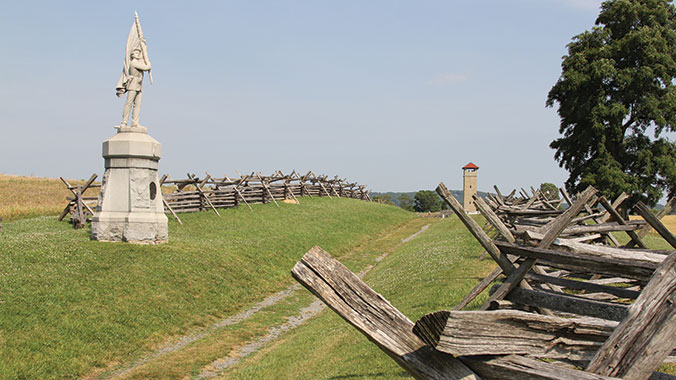
Having been to Gettysburg only a few years ago, this was an interesting subject and challenge. How to get younger people to visit and how to get people to return more than once or even often. i took experience i have and have had with educational organizations like museums and historical sites to develop for this goal. I always learned more and was more interested in exhibits and subjects when they were interactive, its why science museums and aquariums are so great for a younger audience, they can appreciate it if they can interact with it.Getty2

So i designed an equivalent of the physical interactive “games” of science museums into a AR format to be used on the Field of Gettysburg. They can also add more mini-games like a museum adds new exhibits.

Brainstormed Game Idea:

  1. Location AR, Education, and Mini-game selection
  2. Scanning signs, Posts, Statues. Resulting in small location based mini-games with competitive scoring and optional multiplayer interaction. like reloading firearms of the time, loading a cannon, cooking military meals, supply management, medical work.
  3. https://www.youtube.com/watch?v=9CgDa3f8bLU, Pokemon go as it is travelling about doing small tasks at defined locations.
  4. https://www.youtube.com/watch?v=RGdm0eOEKEc, civil war video game. Defined graphics that give a sense how things actually might have looked in context
  5. Give an interactive way of learning about the battle and the armies that fought at it, the actions and conditions.
  6. This interactivity will also draw in a younger audience and the competitive/multiplayer will keep people coming back. The game can also be expanded by simply adding a new mini-game, furthering its life span and causing more reason for people to return when a new mini-game or new set of mini-games are made.
  7. Can be completed in parts easily, holds a player for a good amount of time while educating them in a interactive and meaningful way. Multiplayer also allows for group attendance and group fun.

Team Members:

Myself,

Noah Dartt,

Seth Nunley,

Chris Reitz

Horse Barn Fires, Training and Rescue Serious Game 9/25/18

Research:

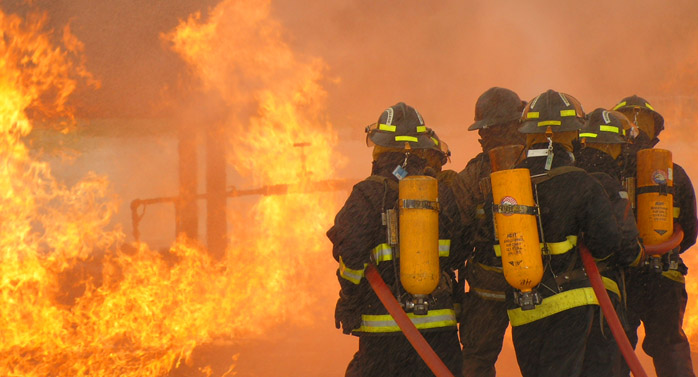
We learned a lot from our entity in class, we took pages of notes. For the Serious game idea i came up with, we need an immense amount of expertise, we need it from BART among other sources to accurately represent horses and their behaviors, especially when the horses are scared/stressed, so that an horse AI can be programmed accurately, and it needs to be incredibly accurate for both the lives of horses and firefighters. We also need a large catalog of horse barn layouts with their building materials for accurate Massachusetts representation, so that when the firefighters train using this game, the setting is more likely to be useful and accurate. We also need the expertise of firefighters who have dealt with barns fires, preferably horse barns as to make sure the progression of the fire while firefighters are trying to save horses is also accurate.

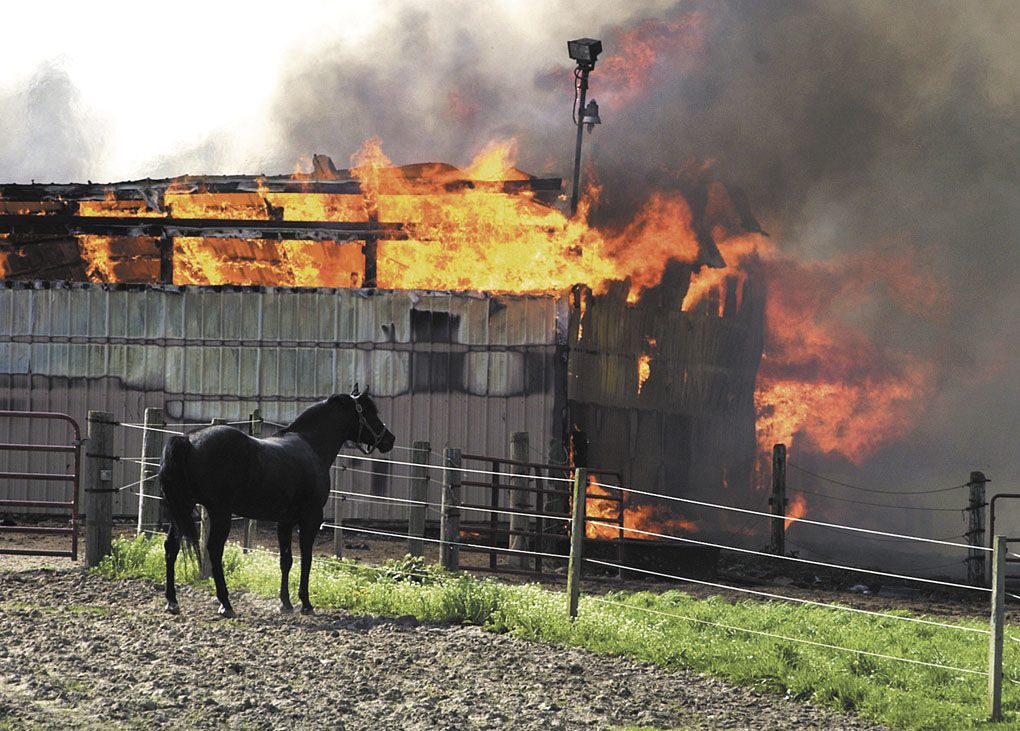
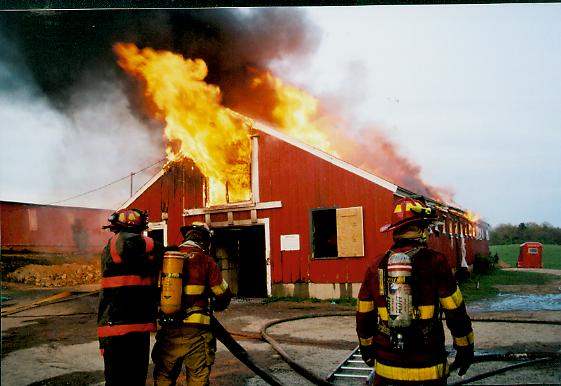
BarnFire1

I’ve said accurate plenty of times while writing, but lives are on the line, if something isn’t accurate enough it could get not only horses killed but firefighters as well.

Brainstormed Serious Game Idea:

  1. Genre: VR Firefighter Horse Rescue Simulator.
  2. Core Mechanics: Real-time horse barn fire with accurate horse decision and action of which the firefighter must interact with in an attempt to save them from the ongoing fire. No direct firefighting as the firefighters already know how to do that, only saving horses under a strict time limit and dangers. Multiple Barn setups and randomized fire and horse situations.
  3. Game Reference: Note: There are practically no games with direct animal rescue mechanics (I found a VR puzzle game video instead, as this game needs to be highly interactive. https://www.youtube.com/watch?v=fQx_RkCZpMU)
  4. Style Reference: clean, no need to distract if not mechanical https://www.youtube.com/watch?v=GXuyOKNmFHE
  5. Main Goal: The main goal is to teach firefighters how to not only save horses during a barn fire but also to teach firefighters practices that will save their own lives while also rescuing horses.
  6. Meeting the Goal: We do not need to to teach firefighters how to fight fires but we do need to teach them how to handle horses. We can do that by allowing the firefighters to interact with virtual ones in the immersive environment of VR, with it we can give firefighters the closest thing to hands on experience without actually setting any barns ablaze with horses inside.
  7. Unique Attributes: Real-time simulation of possible events, the realistic event where the firefighter cannot save them all sometimes, and also showing the dangers to the firefighter’s own life when dealing with scared horses.

Team Members:

Myself,

Noah Dartt,

Chris Reitz,

Seth Nunley

Implicit Bias: Game Brief 9/18/18

So with the response from our peers, we decided to expand upon the second of our three ideas. The idea fit what entity wanted more so than the other ideas while also having the shortest and least costly development. It also has the benefit of showing implicit bias in a scenario that the to-be teachers would be put into in within their careers, having a more practical impact than our other more game-y ideas.

Game Brief:

Genre:

Grading Simulator

Audience:

Graduate teachers performing a course on implicit bias, specifically those looking to see how their own bias affects their grading of students.

Primary Objective:

Show teachers how implicit bias can directly affect grading in the classroom.

It meets the needs of the teachers by showing how their own implicit bias can directly harm or benefit students in a low stakes environment.

We chose this objective because there is a large amount of pre-existing pre-graded material to compare it to which removes our own biases from the equation leaving only the teachers own.

Introduction to Game:

Mechanics: Look at a piece of a paper and grade it on an A-F scale. Only information you get is name and appearance as well as various expressions of students as they pass the paper in.

Afterwards they show a chart of what everyone graded the papers as well as the real grade from online to allow for discussion.
Story: You are a teacher grading papers in a classroom

Look/Feel: Generic/sterile (clean paper, clean desk, clean floor), Quick and easy UI , focus is on the papers and the students

What mechanics in the game are you using to optimize and actualize the objective:

Unlike a similar game (fairplay) this game aims to show the actual effects of implicit bias on grading through the use of discussion in the classroom of results based on pre-graded papers.

Game Control:

Player selects sections in the paper where they think there are issues and then a spot where they can select a grade to give the paper. The mouse is used for selection and picking the grade.

Interface/Information:

  • Things you can see:
    • Snippet of paper and question it was answering
    • Student + Name
    • Grading options
    • “Highlighter” to show issue areas
    • Next button

Main User Mechanics/Actions:

Select: Select sections on papers

Match: Match grades to papers

Levels/Environment:

Environment One is the classroom, specifically the teachers desk

Environment Two is a spreadsheet of grades and papers

Obstacles:

The Paper is the only obstacle as not grading it will prevent you from moving on to the next paper.  

Describe and Explain the unique ways in which your game idea meets the needs of the theme, entity, AND objective:

It shows a direct connection between the teachers implicit bias and grading in the classroom and shows how a teachers bias can directly affect the classroom

Sixty Seconds of Play:

Player receives a paper and student, they grade the paper choosing “problem” areas and a final grade. After grading the set of papers they show all of the grades given by teachers and the “true” grade given online as well as the students associated with papers to allow for discussion

Links:

Production:

Estimated number of Developers: 5

Special Licensing: Access to pre-graded papers

Estimated Length of time for Dev: 2 to 3 months

Estimated Costs: Salaries of developers

Plan for post release: None


Group Members:

Myself,

Noah Dartt

Seth Nunley

Chris Reitz

Implicit Bias, Research and Game Design 9/11/18

Research:

I decided to research, in particular, on whether a game would be the correct course of action for the replacement of an Implicit Bias lesson, what works and what does not. Finding a digital game other than or in reference to Fair Play (Talked about here http://wiseli.engr.wisc.edu/fairplay.php ), was practically impossible, digital games dealing with Implicit Bias seem unpopular or at least uncommon. Fair Play is well done and does what it set out to do, exposing college professors and those in the STEMM field to Implicit Bias awareness. Fair Play was successful enough that a another game went underdevelopment from the University of Wisconsin last year targeting K-12 educators (https://newsone.com/3727367/video-game-teacher-implicit-racial-bias/ ), deciding to take the Virtual Reality route to further increase the emersion.

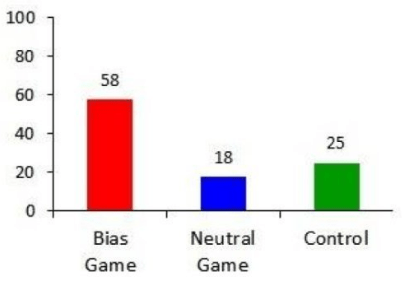
After figuring out that people truly believed their value, I looked into whether it statistically helped to play games designed around exposing Implicit Bias, if it in actuality did not help we would have another issue to deal with. So I went looking and found some confirmation and some helpful information on not only approach but design. From this study on Cyberpsychology https://www.sciencedaily.com/releases/2015/10/151026092922.htm they designed two card games around Implicit Bias and used them to test whether playing a game that exposed Implicit Bias made people test differently, affected by it. They discovered that it not only makes a difference but a major one, and figured out some beneficial design philosophies to boot. The design philosophy was that subtly in its message was key, making the card games only partially refer implicit bias and none of the players were told it was about it. Helping them unconsciously retrain themselves. The below chart was the result of their testing on the card games. The chart shows the percentage of people who assigned scientist to a female character in the post-card game test.

Chart

The Bias game was their card game unaltered in its full form, the neutral game was when they removed all the bias cards from their game, and the control group never played the card game.

After all this I am convinced that a game can be provided that replaces the Implicit Bias lesson but there are some design problems, because of the week long Implicit Bias training we cannot take the covert approach used by the University of Wisconsin, so we must take a more direct approach similar to Fair Play to expose the learning teachers to implicit bias.

Brainstormed Group Serious Games Ideas:

1: Story driven decision tree point and click adventure

  • Adventure, RPG
  • Decision trees, impactful decisions
  • Telltale Walking Dead Playstyle: https://www.youtube.com/watch?v=Y9SnHso3ezE
  • Sims style: https://www.youtube.com/watch?v=p7BAUNzJvts
  • Reveal and educate the player about implicit bias
  • The player’s decisions will show how their implicit bias’ affect others as their decisions have long-reaching implications
  • Impactful decision making, Ability to react to bias in conversations

2: Teacher Grading Game

  • Puzzle?
  • “Grading” papers after only seeing their appearance and some notes about each student. Read over and give a grade. All questions would have very open ended answers.
  • Papers Please: https://www.youtube.com/watch?v=ApbpdKmf1_8
  • Paper Please: https://www.youtube.com/watch?v=ApbpdKmf1_8
  • Force the player to use their opinions and judgement on grading students work with only a little information
  • The game will force the players to only rely on their own opinions and judgement and force them to consider if they are really being fair or if there is some bias influencing their actions which has been shown to help reduce implicit bias in previous studies
  • Showing how bias can potentially impact grade or class performance

3: Classroom Simulation with prioritizing mechanics based around students

  • Classroom management, isometric
  • Managing the needs of students as they pop up in multiple places
  • Diner dash playstyle: https://www.youtube.com/watch?v=-mhwkNR2nrk
  • Diner dash style: https://www.youtube.com/watch?v=Jsv6S1uNuZo
  • Reveal how the player prioritizes students to show implicit bias
  • The player will be forced to assist students as they all have multiple issues
  • Balancing the player’s effort around the classroom, in order to see who they prioritize

Group Members Link:

Myself,

Noah Dartt

Chris Reitz

Seth Nunley